Somerset County’s Geospatial AI Revolution with CityData

Quantifying Community Vibrancy: How Somerset County Leverages CityEconomy and CityEvents AI for Economic Sovereignty
The New Frontier of Municipal Intelligence and Economic Resilience
The historical management of municipal economic development has long been constrained by a reliance on static indicators and qualitative anecdotes. For decades, county administrators and economic planners were forced to make multi-million dollar decisions based on periodic census updates, annual sales tax receipts, and manual footfall counts that offered only a fragmented snapshot of community vibrancy.1 However, the emergence of mobility intelligence represents a fundamental paradigm shift. In the modern era, a county is no longer viewed as a static collection of streets and buildings, but as a dynamic ecosystem of human movement and interaction.2
Somerset County, New Jersey, has emerged as a national leader in this digital transformation. Having maintained a strategic partnership with CityData AI for over two years, the county has moved beyond traditional metrics to embrace a high-fidelity, data-driven approach to economic sovereignty.3 By integrating two flagship artificial intelligence products—CityEconomy AI and CityEvents AI—Somerset County has developed the capability to quantify the usage, activity, and engagement levels of its downtown zones, commercial corridors, and community festivals with forensic precision.3 This transition from anecdotal observation to algorithmic certainty allows the Somerset County Office of Economic Development (OED) to advocate for its "Main Street" economies with empirical authority, ensuring that every policy intervention and marketing dollar is backed by real-world movement data.3
The complexity of modern urban movement requires a sophisticated technological response. Human behavior is influenced by an array of variables, from shifting work-from-home patterns to the seasonal rhythms of local weather and the gravitational pull of community programming.1 Understanding these interactions requires a "Digital Twin"—a virtual, high-fidelity replica of the physical environment that can simulate outcomes and track progress over time.3 For Somerset County, this digital twin provides the visibility needed to support high-growth sectors such as Life Sciences, Advanced Manufacturing, and the burgeoning Film and TV industry, all while protecting the privacy and digital rights of its residents through a "Privacy by Design" framework.3
CityData AI: The Architectural Foundation of Civic Innovation
CityData AI, headquartered in the technology epicenter of San Francisco, California, is a geospatial big data and artificial intelligence firm dedicated to the public sector.2 Founded in 2020 by Apurva Kumar, a geospatial engineering expert with foundations in Stanford’s engineering and earth sciences departments, the company was built on the principle that cities and counties require specialized tools that commercial marketing firms cannot provide.3 Unlike entities that monetize individual tracking for advertising, CityData AI focuses exclusively on civic use cases, deriving insights from a massive pool of anonymized, privacy-compliant mobility signals to help governments make informed decisions regarding transportation, economic development, and community engagement.4
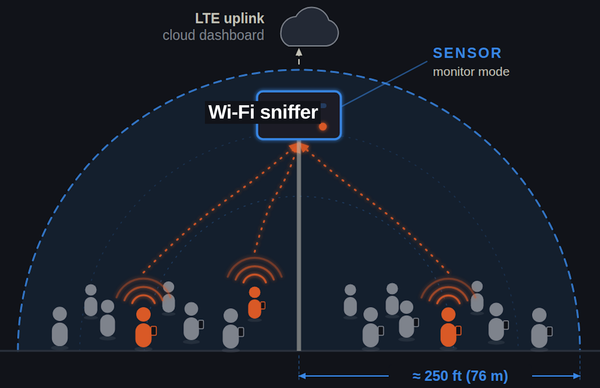
The technical infrastructure of CityData AI is designed to process over 10 terabytes of daily mobility data sourced from a global network of over 10,000 providers, including mobile applications, connected vehicles, and IoT sensor feeds.3 This raw telemetry is subjected to rigorous cleaning, normalization, and aggregation through proprietary machine learning algorithms.4 The result is a suite of AI-powered products that provide counties like Somerset with a 360-degree view of their physical and economic landscape.
Product: CityEconomy AI
Primary Function: Measures footfall, trade areas, and economic vitality in commercial districts.
Civic Target Agency: Economic Development, Urban Planning.2
Product: CityEvents AI
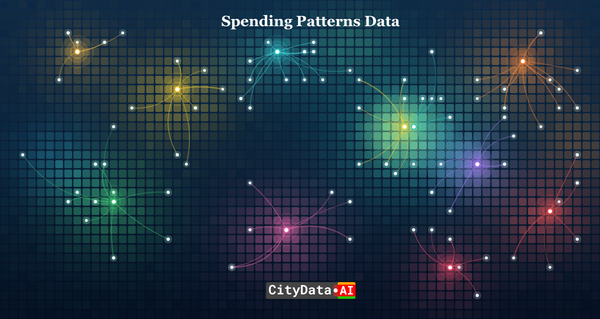
Primary Function: Estimates attendance, origins, and spending patterns for festivals and concerts.
Civic Target Agency: Tourism Boards, Parks & Rec, Event Organizers.2
Product: CityParks AI
Primary Function: Quantifies usage for parks, trails, and natural resources for budget allocation
Civic Target Agency: Parks and Recreation Departments.2
Product: CityFlow AI
Primary Function: Analyzes multimodal movement (walking, driving, transit) to identify congestion.
Civic Target Agency: Departments of Transportation (DOTs).2
Product: CitySensor AI
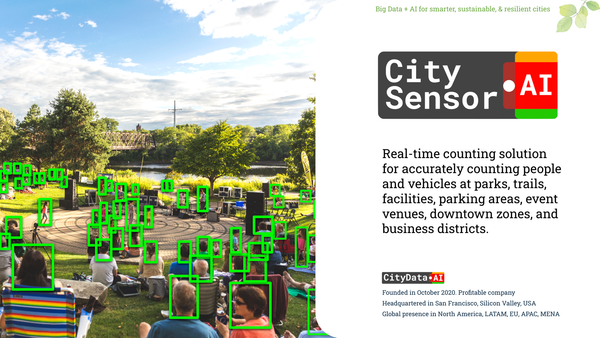
Primary Function: Provides real-time ground truth counts via ruggedized IoT optical sensors
Civic Target Agency: Public Works, Operations, Emergency Services.3
This comprehensive approach ensures that Somerset County can move beyond basic people counting to understand the "choreography" of its residents—how they move through the county, where they cluster, and how they interact with the local economy.1
Decoding CityEconomy AI: The Heartbeat of Commercial Vitality
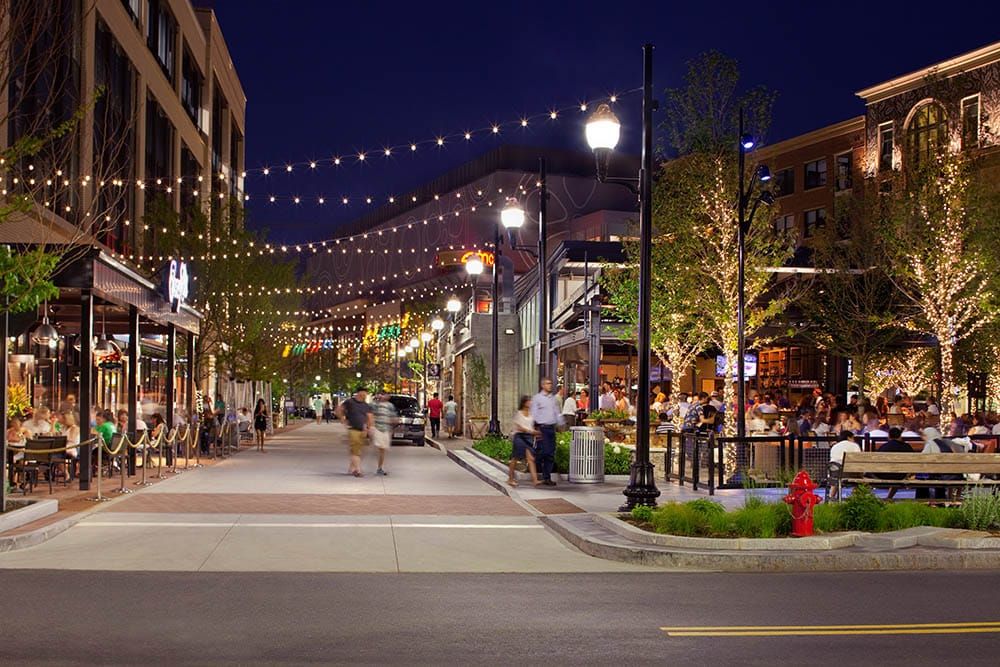
CityEconomy AI is the primary tool used by Somerset County to understand and boost its downtown areas and business zones.2 In a post-pandemic world, the traditional boundaries of commercial activity have blurred. Retail hubs and business improvement districts (BIDs) must compete more aggressively for foot traffic, and CityEconomy AI provides the evidence needed to recruit new businesses and secure development.3
Advanced Features and Dashboard Capabilities
The Somerset County CityEconomy AI dashboard, hosted on the Looker platform, is structured to provide a multi-dimensional view of commercial activity.3 The system breaks down data into several key pages and charts that offer deep insights into the economic health of the region:
- Visitation Quantification and Time-Series Analysis: This feature allows administrators to view total visitor counts across specific commercial polygons. The dashboard provides visitation trends with granular hourly, daily, and monthly distributions.3 By identifying peak visitation hours, the county can assist businesses in optimizing their staffing and help municipalities manage services like trash collection and public safety patrolling.1
- Trade Area and Origin Analysis: This is perhaps the most critical feature for economic recruitment. The dashboard maps visitor origins at the Census Block level, showing where people are traveling from to reach Somerset’s commercial zones.3 This data allows the Office of Economic Development to prove the "reach" of a business district to potential retailers and investors.3
- Customer Loyalty and Frequency Estimates: The system identifies repeat visitors versus one-time tourists. High repeat visitation rates indicate a loyal local customer base, while surges in new visitors can be used to measure the success of regional marketing campaigns.2
- Movement Patterns and Dwell Times: The dashboard measures average dwell time—how long a person remains within a specific commercial zone.3 Longer dwell times are a high-value metric for "Main Street" revitalization, as they often correlate directly with increased spending in local restaurants and boutique retail.1
The Role of Cross-Visitation and Spillover Effects
A unique insight provided by CityEconomy AI is the analysis of cross-visitation patterns.3 This allows Somerset County to see where visitors go before and after entering a commercial district. For example, the data may reveal that 35% of people who visit the county’s vocational-technical school subsequently spend time in a nearby retail corridor.3 This empirical proof of "spillover" economic activity is essential for justifying public infrastructure projects and proving the value of educational or cultural anchors within the community.3
The Impact of CityEvents AI: Quantifying the Pulse of Community Engagement
Somerset County’s community vibrant is defined by its festivals, fairs, and cultural gatherings. CityEvents AI is specifically designed to estimate the attendance and economic impact of these events.2 Before the adoption of this platform, event success was often measured by subjective estimates or manual clicker counts at a few entry points. CityEvents AI provides a significantly more robust, technology-driven approach.3
Feature Set for Event Excellence
The CityEvents AI dashboard provides a specialized environment for analyzing short-term spikes in human movement:
- Attendance Counts and Crowd Dynamics: The platform captures visitation spikes associated with festivals and public gatherings, providing the county with accurate attendance figures that can be shared with stakeholders and the media.3
- Visitor Origin and Neighborhood Attribution: By understanding the neighborhood origins of attendees, the county can tailor its event marketing to communities with strong visitation numbers or direct additional outreach to areas where engagement is low.3
- Demographic Attributes of Attendees: The system correlates visitor movement with aggregate census data (such as median income, age, and language) at the block group level.3 This ensures that county events are inclusive and that signage or materials are available in the languages most commonly spoken by actual attendees.3
- Before-and-After Behavior Tracking: CityEvents AI tracks the movement of attendees before they arrive at the event and after they leave. This is used to prove the "economic gravity" of festivals, definitively showing how attendees support nearby restaurants and small businesses.3
This data-driven approach to event management has transformed Somerset County's relationship with its business community, moving from a request for "community support" to a data-backed "sponsorship opportunity" based on verifiable footfall.3
Strategic Initiatives: The Somerset County Economic Context
The Somerset County Office of Economic Development, established in 2021, operates with a mission to advance regional development and deepen human capital.5 The county has strategically identified four sectors that have an outsized influence on the local economy due to their density and growth potential: Life Sciences, Cosmetics & Personal Care, Advanced Manufacturing, and Film & TV.5
Target Industry Clusters and Innovation
Somerset is a primary hub for the global pharmaceutical and life sciences industries, and the county’s leadership recognizes that these high-value sectors require advanced infrastructure and a skilled workforce.5 To support these industries, the county has launched several innovative initiatives:
- Talent Attraction ("Why Somerset"): Somerset was the first county in New Jersey to launch a dedicated tool to help businesses access a highly skilled workforce.5 Mobility data from CityData AI helps the county understand where this talent lives and how they commute, informing transit and housing policies.3
- The Raritan Valley Community College (RVCC) Partnership: Ranked the #1 community college for career training in NJ, RVCC works with the county to launch specialized programs, such as the Special Effects Makeup program designed to support the burgeoning Film & TV sector.5
- Modern Logistics and Drones: Somerset is at the forefront of logistical innovation, hosting the first-ever food delivery drone service in a New Jersey town.5 The movement analytics provided by CityData help the county visualize how these new logistics models integrate with traditional traffic and pedestrian patterns.2
By applying CityEconomy and CityEvents AI, the county can monitor the "health" of the physical locations where these industries operate, ensuring that the surrounding commercial ecosystems remain vibrant and supportive of the workforce.5
Case Study: The Somerset Application – Proving Economic Gravity
In a notable reference letter regarding their work with CityData AI, Somerset County Director of Economic Development Jessica Paolini highlighted several transformative use cases.3 The county has leveraged the AI platforms to transition away from "anecdotal methods" toward empirical decision-making.3
Proving the "Economic Gravity" of Festivals
One of the most impactful applications has been the empirical proof of how county festivals drive business to local restaurants and shops.3 By mapping cross-visitation, the county can show exactly how many people who attended a cultural event subsequently spent time in the surrounding commercial district. This verifiable data has fundamentally changed the county’s outreach, allowing them to pursue corporate sponsorships to fund community revitalization projects with a clear promise of ROI for the sponsors.3
Supporting Grant Opportunities and FIFA 2026
The ability to "ground-truth" visitation data has significant financial implications for the county's competitive positioning for state and federal grants. For example, as New Jersey prepares for the FIFA World Cup 2026, with the final being held at MetLife Stadium, there are millions of dollars available in community engagement grants.6 Somerset County uses CityData AI to provide the precise reporting required for these applications, strengthening their probability of being awarded funding to support fan zones, watch parties, and street fairs.3
Operational Support for Municipalities
The county leverages precise footfall counts to assist local municipalities and Business Improvement Districts (BIDs) with logistical planning. This includes:
- Traffic and Parking: Identifying peak congestion times to coordinate law enforcement and parking management.3
- Staffing and Resources: Providing local businesses with data on peak periods so they can optimize their staffing and inventory.1
- Advertising: Tailoring marketing to the neighborhood origins of the actual visitor base.3
Privacy by Design: Protecting the Digital Rights of Residents
Central to the Somerset County implementation is a strict adherence to privacy.3 CityData AI operates under a "Privacy by Design" framework, ensuring that the collection of mobility data does not compromise the anonymity of individual citizens.3
Anonymization and Hashing Protocols
The platform never processes Personally Identifiable Information (PII) such as names, phone numbers, or email addresses.3 Instead, it uses a multi-layered anonymization process:
- Cryptographic Hashing: Mobile identifiers (MAIDs) are hashed using SHA-256 protocols before they are ever stored, ensuring they cannot be traced back to an individual.3
- k-Anonymity and Differential Privacy: The system filters out data samples that fall below a certain density threshold to prevent the isolation of single users. It also "perturbs" or blurs GPS coordinates slightly to protect the exact location of a user's home or workplace.3
- Inferred Demographics: Demographic insights are derived by identifying the "common evening location" of a hashed device at the Census Block Group level and applying the aggregate statistical characteristics of that neighborhood (from the U.S. Census) to the visitor profile.3
This approach allows Somerset County to understand its population’s needs without ever conducting digital surveillance on an individual level.3
The Strategic Importance of Weather Correlations
A sophisticated feature of the Looker dashboards provided to Somerset County is the correlation of footfall with weather data.3 Traditional economic analysis often ignores environmental factors, yet weather is a primary driver of human behavior in "Main Street" environments.
The CityData platform correlates visitation with several specific weather variables:
- Temperature and Humidity: Identifying the comfort threshold that drives people to outdoor festivals or indoor shopping malls.4
- Rainfall and Snowfall: Quantifying the "economic cost" of inclement weather on a downtown event, allowing the county to make more accurate year-over-year comparisons.4
- Pressure and Visibility: Providing a forensic level of detail for operational planning.3
By understanding these correlations, Somerset County can better predict the impact of weather-related disruptions and adjust its economic resiliency strategies accordingly.2
Narrative: Why This Data is the Lifeblood of Modern Local Government
For cities, counties, and local agencies, the adoption of mobility intelligence is not just a technological upgrade—it is a survival strategy in an increasingly complex economic landscape. The data provided by CityEconomy AI and CityEvents AI is "incredibly helpful" because it solves the "visibility gap" that has plagued municipal operations for a century.1
Strategic Resource Allocation
When a county can quantify exactly how many people are using a specific commercial corridor or visiting a downtown park at 2:00 PM on a Tuesday versus a Saturday, the entire philosophy of public service changes. Budgeting becomes an exercise in precision rather than negotiation. Resource allocation for public works, safety, and sanitation can be shifted to the areas and times of highest need, maximizing the efficiency of every taxpayer dollar.1
Empowering the Small Business Ecosystem
Small businesses are the backbone of Somerset County’s economy. By providing these businesses with access to high-level footfall analytics and visitor origin data, the county is giving them a "competitive edge" that is usually only available to massive multinational corporations.1 This information allows a local retailer to understand where their customers live and when they are most likely to walk past their storefront, enabling them to optimize their advertising and hours of operation.3
Resiliency and Disaster Planning
In an era of increasing environmental and economic volatility, mobility intelligence provides the baseline for resiliency. During natural disasters or public health crises, the ability to monitor "zero-mobility" clusters or track evacuation compliance in real-time is a critical capability for emergency management.4 By understanding the normal "patterns of life" in their community, Somerset County can better identify when those patterns are disrupted and where to direct assistance.2
A Scalable Blueprint for Smart Governance
Somerset County’s 2-year partnership with CityData AI has established what Jessica Paolini calls a "scalable blueprint for smart governance across the State of New Jersey".3 By leveraging CityEconomy AI and CityEvents AI, the county has not only improved its internal operations but has also created a more transparent, responsive, and thriving environment for its residents and businesses.3
The quantification of community vibrancy through geospatial AI allows Somerset County to lead with empirical authority. Whether they are advocating for multi-million dollar grants for the 2026 World Cup, recruiting a global life sciences firm to a new facility, or ensuring that a local Juneteenth celebration is inclusive and accessible, the county now does so with the confidence of data.3 This is the future of civic innovation—a future where data is the pulse, and artificial intelligence is the heartbeat, of a resilient and prosperous community.
This structured approach to data ensures that information can be easily integrated into other county systems, such as ESRI ArcGIS, Microsoft PowerBI, or Salesforce Tableau, for deeper cross-departmental analysis.3 By bridging the gap between digital telemetry and physical reality, Somerset County and CityData AI are redefining the potential of the modern American county.
Works cited
- Decoding Your Downtown: Mobility Intelligence for Economic Vitality, accessed April 23, 2026, https://blog.citydata.ai/decoding-your-downtown-mobility-intelligence-for-economic-vitality/
- CityData.AI - Urban Digital Twins - Big Data & AI for Smarter ..., accessed April 23, 2026, https://citydata.ai
- Somerset County New Jersey AI50 Awards Reference Letter.pdf
- Gravity Model for Place Visitation Inferences - CityData.AI Blog, accessed April 23, 2026, https://blog.citydata.ai/gravity-model-for-place-visitation-inferences/
- Economic Development | Somerset County, accessed April 23, 2026, https://www.somersetcountynj.gov/residents/economic-development
- World Cup 2026 | Berkeley Heights Township, NJ, accessed April 23, 2026, https://www.berkeleyheights.gov/1598/World-Cup-2026
- NJEDA Board Approves $20M to Support FIFA World Cup 2026, accessed April 23, 2026, https://www.njeda.gov/njeda-board-approves-20m-to-support-fifa-world-cup-2026/
- Applications Are Now Open for $5M World Cup Community Initiative Grants, accessed April 23, 2026, https://www.capemaycountychamber.com/news/2026/04/13/member/applications-are-now-open-for-5m-world-cup-community-initiative-grants/
- Governor Sherrill Launches $5 Million World Cup Community Initiative - NJ.gov, accessed April 23, 2026, https://www.nj.gov/governor/news/2026/20260219a.shtml